
Like us on facebook
Follow us on twitter
review us on google

Causes and Prevention Tips for Foot Stress Fractures

A foot stress fracture is a small crack in a bone, typically resulting from repetitive force or overuse. This injury commonly occurs in athletes or individuals who suddenly increase their physical activity without adequate preparation. Factors contributing to stress fractures include wearing improper footwear, inadequate training techniques, and sudden changes in exercise intensity. Symptoms often involve localized pain that worsens with activity and improves with rest. To prevent foot stress fractures, it is essential to gradually increase activity levels, choose supportive footwear, and incorporate proper warm-up and stretching routines. Strengthening exercises for the foot and lower leg can also help build resilience. If you have sustained a foot stress fracture, it is suggested that you schedule an appointment with a podiatrist who can treat this condition.

Stress fractures occur when there is a tiny crack within a bone. To learn more, contact Pasquale Cancelliere, DPM from Candria Foot and Ankle Specialists. Our doctor can provide the care you need to keep you pain free and on your feet.

How Are They Caused?

Stress fractures are the result of repetitive force being placed on the bone. Since the lower leg and feet often carry most of the body’s weight, stress fractures are likely to occur in these areas. If you rush into a new exercise, you are more likely to develop a stress fracture since you are starting too much, too soon.  Pain resulting from stress fractures may go unnoticed at first, however it may start to worsen over time.

Risk Factors

  • Gender – They are more commonly found in women compared to men.
  • Foot Problems – People with unusual arches in their feet are more likely to develop stress fractures.
  • Certain Sports – Dancers, gymnasts, tennis players, runners, and basketball players are more likely to develop stress fractures.
  • Lack of Nutrients – A lack of vitamin D and calcium may weaken the bones and make you more prone to stress fractures
  • Weak Bones – Osteoporosis can weaken the bones therefore resulting in stress fractures

Stress fractures do not always heal properly, so it is important that you seek help from a podiatrist if you suspect you may have one. Ignoring your stress fracture may cause it to worsen, and you may develop chronic pain as well as additional fractures.

If you have any questions please contact our offices located in Londonderry, NH and Salem, NH . We offer the newest diagnostic and treatment technologies for all your foot and ankle needs.

Read more about Stress Fractures of the Foot and Ankle

Keep Your Feet Healthy So You Can Stay Active

Have your feet inspected by a professional before starting a new sport or physical activity. Taking charge of your foot health will keep you in good physical condition and can help you avoid a potential injury, such as a fracture or sprained ankle.

Prevent injuries and see a foot specialist.

Facts About Flat Feet

Flat feet, or pes planus, come in two main types, which are flexible and rigid. Flexible flat feet show arches that flatten when standing but are visible when sitting, while rigid flat feet have no arch even when sitting. Symptoms often include foot pain, swelling, and difficulty walking or standing for long periods. Risk factors include genetic predisposition, obesity, and certain medical conditions like arthritis. To alleviate discomfort, specific stretches can be helpful. Stretching the Achilles tendon and calf muscles can relieve tension and improve foot flexibility. Foot exercises, such as toe curls and arch lifts, strengthen the muscles supporting the arch. If you have flat feet, it is strongly suggested that you are under the care of a podiatrist who can offer effective relief solutions.

Flatfoot is a condition many people suffer from. If you have flat feet, contact Pasquale Cancelliere, DPM from Candria Foot and Ankle Specialists. Our doctor will treat your foot and ankle needs.

What Are Flat Feet?

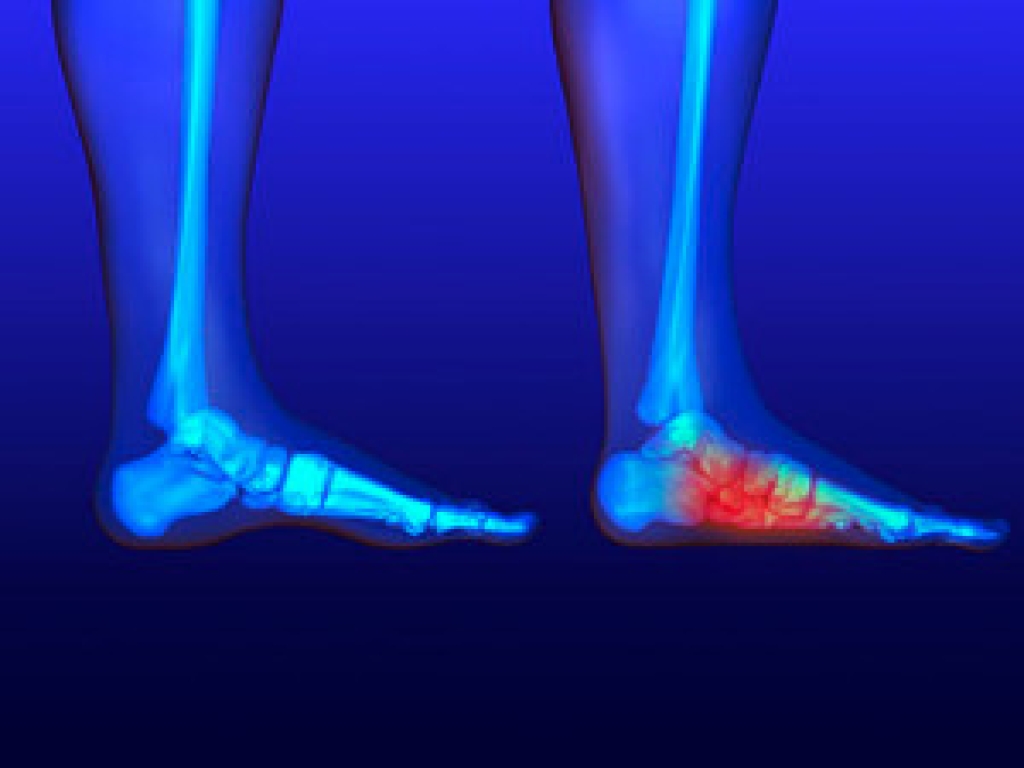
Flatfoot is a condition in which the arch of the foot is depressed and the sole of the foot is almost completely in contact with the ground. About 20-30% of the population generally has flat feet because their arches never formed during growth.

Conditions & Problems:

Having flat feet makes it difficult to run or walk because of the stress placed on the ankles.

Alignment – The general alignment of your legs can be disrupted, because the ankles move inward which can cause major discomfort.

Knees – If you have complications with your knees, flat feet can be a contributor to arthritis in that area.  

Symptoms

  • Pain around the heel or arch area
  • Trouble standing on the tip toe
  • Swelling around the inside of the ankle
  • Flat look to one or both feet
  • Having your shoes feel uneven when worn

Treatment

If you are experiencing pain and stress on the foot you may weaken the posterior tibial tendon, which runs around the inside of the ankle. 

If you have any questions, please feel free to contact our offices located in Londonderry, NH and Salem, NH . We offer the newest diagnostic and treatment technologies for all your foot care needs.

Read more about Flatfoot

Stages of Toenail Fungus

Toenail fungus progresses through distinct stages, each requiring timely intervention. In the earliest stage, the nail may appear slightly discolored, usually yellow or white, with minimal discomfort. Without treatment, the condition advances to the moderate stage, where the nail becomes thicker and more discolored, and may develop a crumbly texture. This stage often involves some pain or discomfort. If untreated, toenail fungus can reach an advanced stage, causing severe thickening, distortion, and detachment of the nail from the nail bed. This stage can lead to significant pain and difficulty walking. In the chronic stage, the infection is longstanding and difficult to treat, potentially leading to permanent damage. If you notice the beginning stages of toenail fungus, it is suggested that you consult a podiatrist who can offer you effective treatment options which may prevent advancing to later stages.

For more information about treatment, contact Pasquale Cancelliere, DPM of Candria Foot and Ankle Specialists. Our doctor can provide the care you need to keep you pain-free and on your feet.

Toenail Fungus Treatment

Toenail fungus is a condition that affects many people and can be especially hard to get rid of. Fortunately, there are several methods to go about treating and avoiding it.

Antifungals & Deterrence

Oral antifungal medicine has been shown to be effective in many cases. It is important to consult with a podiatrist to determine the proper regiment for you, or potentially explore other options.

Applying foot powder on the feet and shoes helps keep the feet free of moisture and sweat.

Sandals or open toed shoes – Wearing these will allow air movement and help keep feet dry. They also expose your feet to light, which fungus cannot tolerate. Socks with moisture wicking material also help as well.

If you have any questions please contact our offices located in Londonderry, NH and Salem, NH . We offer the newest diagnostic and treatment technologies for all your foot and ankle needs.

Read more about Toenail Fungus

Osteoarthritis of the Ankle

Ankle osteoarthritis is a relatively uncommon condition often arising years after an ankle injury that damages the cartilage. Unlike other forms of arthritis, it tends to affect younger individuals, especially those with a history of trauma to the joint. Excess weight can worsen the condition by increasing stress on the ankle and accelerating cartilage deterioration. Symptoms of ankle osteoarthritis include pain, stiffness, and swelling in the joint, which can increase with activity and improve with rest. Patients may also experience a reduced range of motion and a feeling of instability in the ankle. Diagnosis typically involves a physical examination, patient history, and imaging tests, such as X-rays or MRI scans, to assess cartilage damage and joint space narrowing. Treatment focuses on managing symptoms and improving joint function. Conservative approaches include weight management, targeted stretching exercises, anti-inflammatory medications, and orthotics. In severe cases, surgical options like ankle arthroscopy, fusion, or joint replacement may be considered to alleviate pain and restore mobility. If you have persistent ankle pain, it is suggested that you schedule an appointment with a podiatrist for a proper diagnosis and treatment.

Arthritis can be a difficult condition to live with. If you are seeking treatment, contact Pasquale Cancelliere, DPM from Candria Foot and Ankle Specialists. Our doctor can provide the care you need to keep you pain-free and on your feet.

Arthritic Foot Care  

Arthritis is a term that is commonly used to describe joint pain.  The condition itself can occur to anyone of any age, race, or gender, and there are over 100 types of it.  Nevertheless, arthritis is more commonly found in women compared to men, and it is also more prevalent in those who are overweight. The causes of arthritis vary depending on which type of arthritis you have. Osteoarthritis for example, is often caused by injury, while rheumatoid arthritis is caused by a misdirected immune system.

Symptoms

  • Swelling
  • Pain
  • Stiffness
  • Decreased Range of Motion

Arthritic symptoms range in severity, and they may come and go. Some symptoms stay the same for several years but could potentially get worse with time. Severe cases of arthritis can prevent its sufferers from performing daily activities and make walking difficult.

Risk Factors

  • Occupation – Occupations requiring repetitive knee movements have been linked to osteoarthritis
  • Obesity – Excess weight can contribute to osteoarthritis development
  • Infection – Microbial agents can infect the joints and trigger arthritis
  • Joint Injuries – Damage to joints may lead to osteoarthritis
  • Age – Risk increases with age
  • Gender –Most types are more common in women
  • Genetics – Arthritis can be hereditary

If you suspect your arthritis is affecting your feet, it is crucial that you see a podiatrist immediately. Your doctor will be able to address your specific case and help you decide which treatment method is best for you.

If you have any questions please feel free to contact our offices located in Londonderry, NH and Salem, NH . We offer the newest diagnostic tools and technology to treat your foot and ankle needs.

Read more about How to Care for Your Arthritic Foot
scroll to top